
How to Stay Quiet While Deer Hunting (Without Overthinking It)
Deer don’t tolerate unnatural noise.
Not loud noise.
Not obvious noise.
Unnatural noise.
Most hunters focus on scent and movement—but noise is often what ends encounters before they start.
If you’ve ever had a deer stop, look directly at you, and disappear without ever blowing—you were heard.
This guide breaks down how to stay quiet while deer hunting using simple adjustments that actually work in the field.
Why Noise Matters More Than You Think
In pressured areas, deer are conditioned to recognize:
- Metallic sounds
- Fabric scraping
- Repeated human movement
- Gear shifting at unnatural intervals
You don’t need to be silent.
You need to be natural.
For a deeper breakdown of what actually matters during long sits:
What Actually Matters on an All-Day Sit (And What Doesn’t)
Step 1: Fix Your Gear Before the Hunt
Noise problems usually start before you leave the truck.
Check for:
- Loose straps
- Metal-on-metal contact
- Hard plastic knocking
- Zippers under tension
Small issues become big problems once the woods settle.
If your gear makes noise when you walk, it will make noise when it matters.
For specific gear that helps eliminate noise:
Quiet Gear That Actually Matters on Stand
Step 2: Control Movement, Not Just Sound
Most noise isn’t gear—it’s movement.
Common causes:
- Constant adjusting
- Reaching for items
- Shifting weight too often
The more you move, the more opportunities you create for noise.
If staying still is a struggle, start here:
How to Stay on Stand Longer While Deer Hunting
Less movement = fewer mistakes.
Step 3: Manage Fabric Noise (Especially in Cold Weather)
Cold weather gear is one of the biggest noise offenders.
Avoid:
- Stiff outer shells
- Loud insulated jackets
- Over-layering
Instead:
- Use softer outer layers
- Prioritize flexibility
- Minimize friction points
For full cold-weather setup strategies:
Best Gear to Stay Warm on Long Cold-Weather Hunts (Hands, Feet & Core)
Step 4: Organize Your Gear for Silent Access
If you have to look for something, you’ll make noise getting it.
Keep:
- Rangefinder in same place every time
- Calls accessible without digging
- Essentials within reach
Good organization reduces movement—and noise.
For a full system:
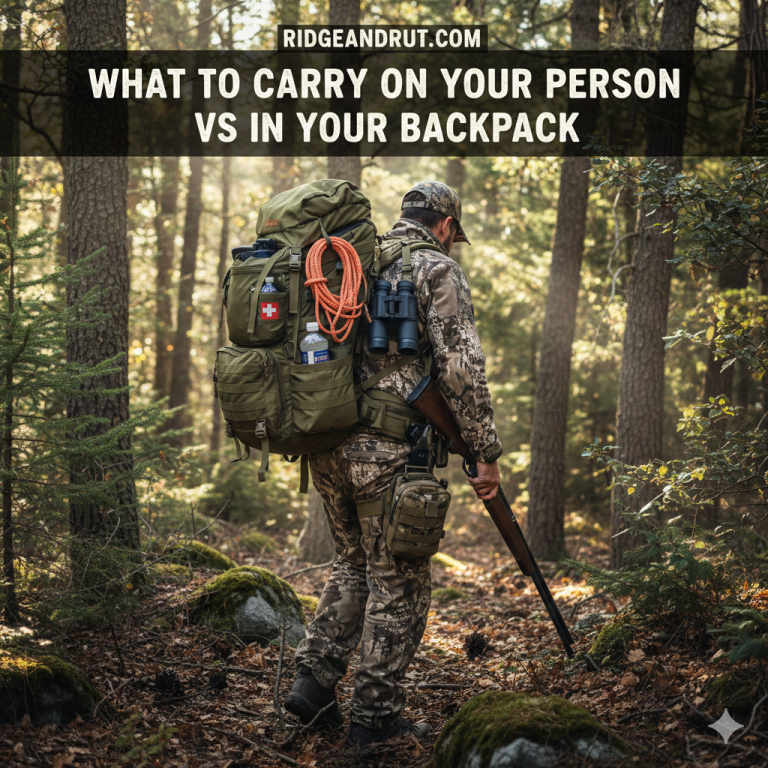
What to Carry While Hunting: On Your Person vs In Your Pack
Step 5: Eliminate Small Noise Sources
The small things get overlooked:
- Loose zipper pulls
- Buckles tapping stands
- Sling swivels
- Hard plastic accessories
Buy these and thank me later! Nite Ize Gear Ties
Use case: securing loose straps, silencing gear
These small fixes make a bigger difference than most expensive upgrades.
Step 6: Slow Down More Than Feels Natural
Most noise happens when:
- You rush
- You react quickly
- You move under pressure
When a deer is close:
- Move slower than you think
- Pause between movements
- Avoid “continuous motion”
Stillness kills more deer than speed.
Common Mistakes That Create Noise
- Overpacking gear
- Using stiff or loud clothing
- Constant repositioning
- Digging through packs mid-hunt
If your setup requires frequent adjustment, it’s working against you.
Final Thoughts
Quiet hunting isn’t about perfection.
It’s about removing unnecessary noise and movement.
If your gear is controlled, your movement is intentional, and your setup is simple—you’ll extend encounters and increase opportunities.
Everything else is noise.