How to Sit All Day While Deer Hunting (What Actually Matters)
An all-day sit sounds simple in theory. Pick the right stand, pack what you need, and wait it out. In practice, long sits expose weaknesses fast—both in preparation and mindset.
After enough hours on stand, the noise fades, the woods settle, and reality sets in. Small discomforts become big distractions. Minor mistakes compound. And the difference between staying sharp and climbing down early often has nothing to do with toughness.
All-day sits reveal what actually matters—and just as importantly, what doesn’t.
The First Few Hours Are Easy
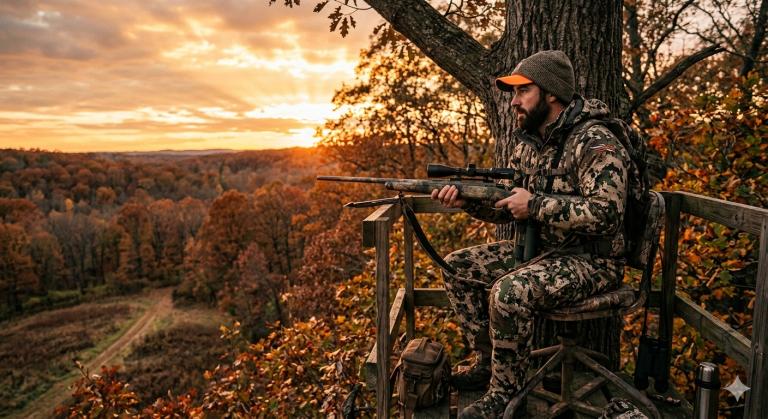
Understanding the Challenges of an All Day Tree Stand Sit
Early in the sit, everything feels manageable.
- Gear is organized
- Legs still feel loose
- Cold hasn’t settled in
- Focus is high
This is when many hunters overestimate their setup. If something is slightly off—clothing, positioning, noise—it usually won’t show up yet.
The real test comes later.
What Actually Matters After Hour Four

Stillness Beats Comfort
Comfort helps, but stillness matters more.
Every adjustment:
- Shifts weight
- Creates movement
- Breaks rhythm
The hunters who last longest aren’t the most comfortable—they’re the ones who move with intention and accept a certain level of discomfort without reacting to it.
Warmth Is About Consistency, Not Bulk
Cold doesn’t usually hit all at once. It creeps.
Hands stiffen first. Feet follow. Once you’re cold, recovery is hard.
What matters most is:
- Staying dry
- Blocking wind
- Preventing heat loss early
Trying to “fix” cold after it sets in almost always fails.
Noise Control Becomes Critical
As hours pass, the woods get quieter.
Small sounds you didn’t notice earlier suddenly stand out:
- Fabric brushing bark
- Metal shifting
- Unsecured gear moving
On long sits, noise discipline matters more than gear quantity.
What Stops Matter Less Than People Think
Gadgets Don’t Fix Focus
Extra gear doesn’t help when:
- Legs cramp
- Cold sets in
- Boredom creeps up
In fact, more gear often creates more movement, more noise, and more distraction.
Food Isn’t the Problem—Pacing Is
Snacks help, but they don’t replace patience.
Most early climbs down happen because:
- Hunters get restless
- They convince themselves movement is happening elsewhere
- Discomfort becomes an excuse
The best sits are often uneventful—until they aren’t.
The Mental Side of Long Sits
The hardest part of an all-day sit is not physical. It’s mental.
Long periods of inactivity test:
- Confidence in stand choice
- Willingness to wait
- Discipline to stay ready
Many deer are killed late in the sit—not because the setup changed, but because the hunter stayed engaged when others would have left.
When Preparation Actually Shows
Preparation reveals itself quietly on long sits.
It looks like:
- Fewer adjustments
- Less gear handling
- Calm reactions instead of rushed ones
- Confidence to stay put when nothing is happening
Good preparation doesn’t make long sits easy. It makes them manageable.
Closing Thought
All-day sits strip hunting down to its basics. Time, patience, and discipline matter far more than novelty or excess gear.
If you can stay still, stay focused, and stay committed when nothing is happening, you’re already ahead of most hunters in the woods.